
"A Principal Part"
Brief notes on congregationalism and the magistrate

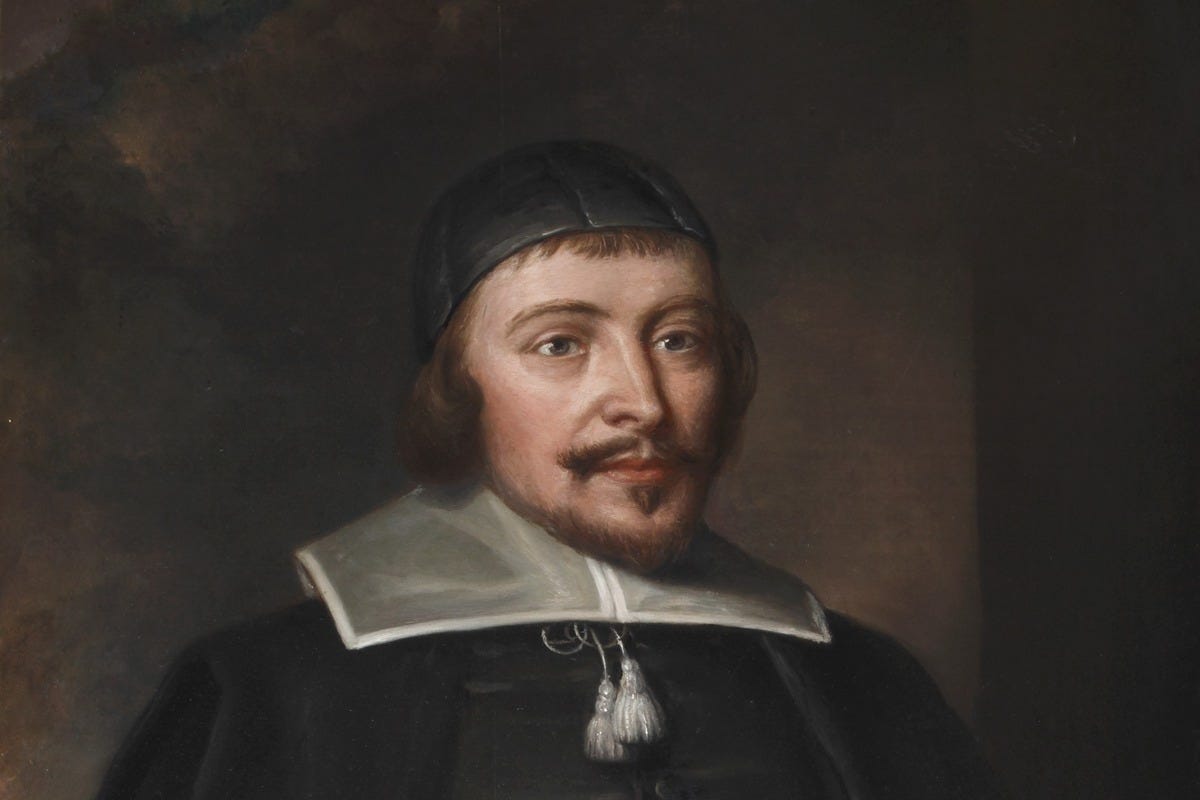
I mentioned before that I’m reading Hunter Powell’s The crisis of British Protestantism. It’s a brilliant study of mid-seventeenth century congregationalism, to state it crudely. One nugget in the first chapter is worth emphasizing here. In 1640/41 Jeremiah Burroughs and Thomas Goodwin wrote a pamphlet, The Petition for the Prelates Briefly Examined. Read Powell for all the context. He says this pamphlet has been overlooked and that it does, in fact, present a platform of church government. The boundaries of ecclesiology weren’t the same in the late 1630s and early 40s as they would be later, and the group Burroughs and Goodwin were affiliated with was not strictly congregationalist as we later think of it. But here’s two Congregationalists on the magistrate (included in the Petition):
Although the civill and Ecclesiasticall government be different kinds of governments, yet it is a principall part of the civill Magistrate, who is the keeper of both Tables, to have a care of the Church, and to exercise his authoritie for the preservation of Religion, and for the peace and safety of the church.”
Goodwin was an architect, along with John Owen, of the Cromwellian church, as Powell notes.
A principal part… would the ostensible champions of “congregationalism” in 9Marks world affirm this? Unlikely. As I recently learned from a review (I refuse to link) of James Baird’s book, simply asserting a Baptist identity negates all this.